

NASA: A Day in the Life Without the ISS
A Day in the Life Without the ISS is a marketing video created for NASA through a semester-long client engagement at Parsons School of Design. With the International Space Station (ISS) set to retire in 2030, this video was created to highlight its achievements and contributions to humanity — translating complex science into stories that engage audiences and grow public understanding of the importance of space exploration.
CONTEXT
15-Week Client Engagement · Parsons School of Design · Speculative strategy, prototyped
TEAM
16 designers total — full team collaborated on research and ideation and divided into subgroups of four to develop each prototype.
YEAR
2025
INDUSTRY
Aerospace / Science Communication
TECH STACK
Adobe Premiere Pro
Figma
Perplexity AI (research)
ChatGPT (mockup generation)
Miro
MY ROLE
CREATIVE STRATEGY
MARKETING STRATEGY
RESEARCH & INSIGHTS
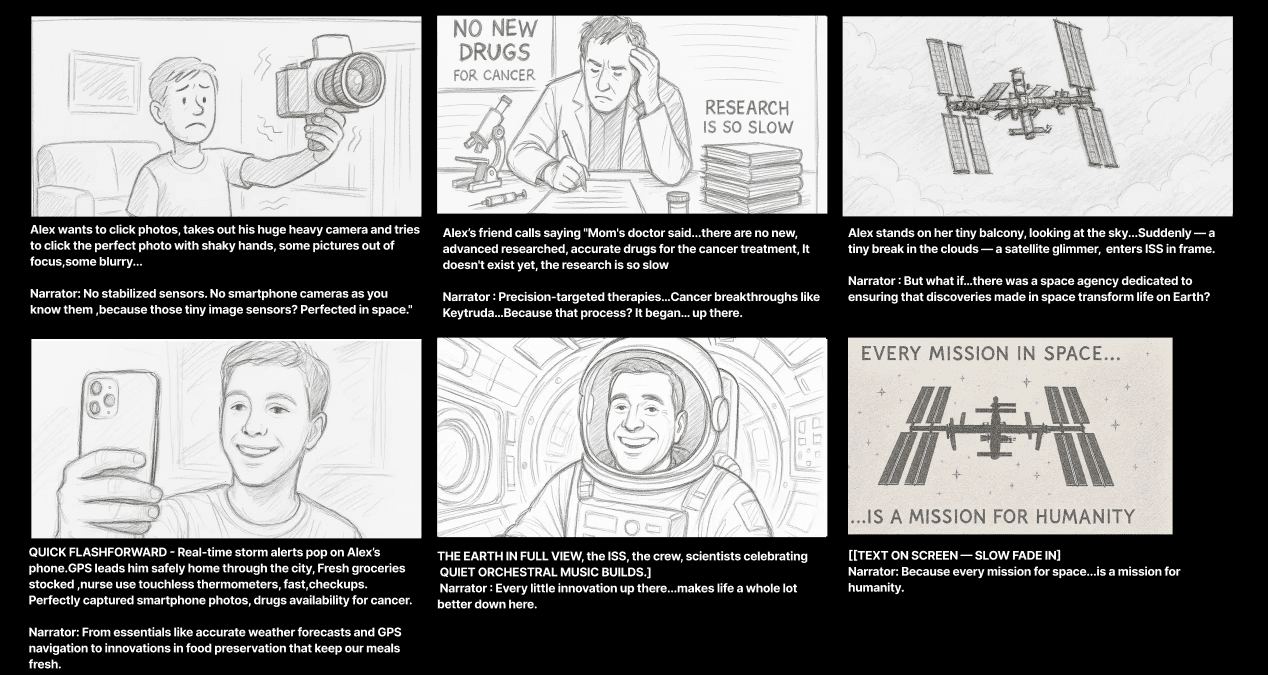
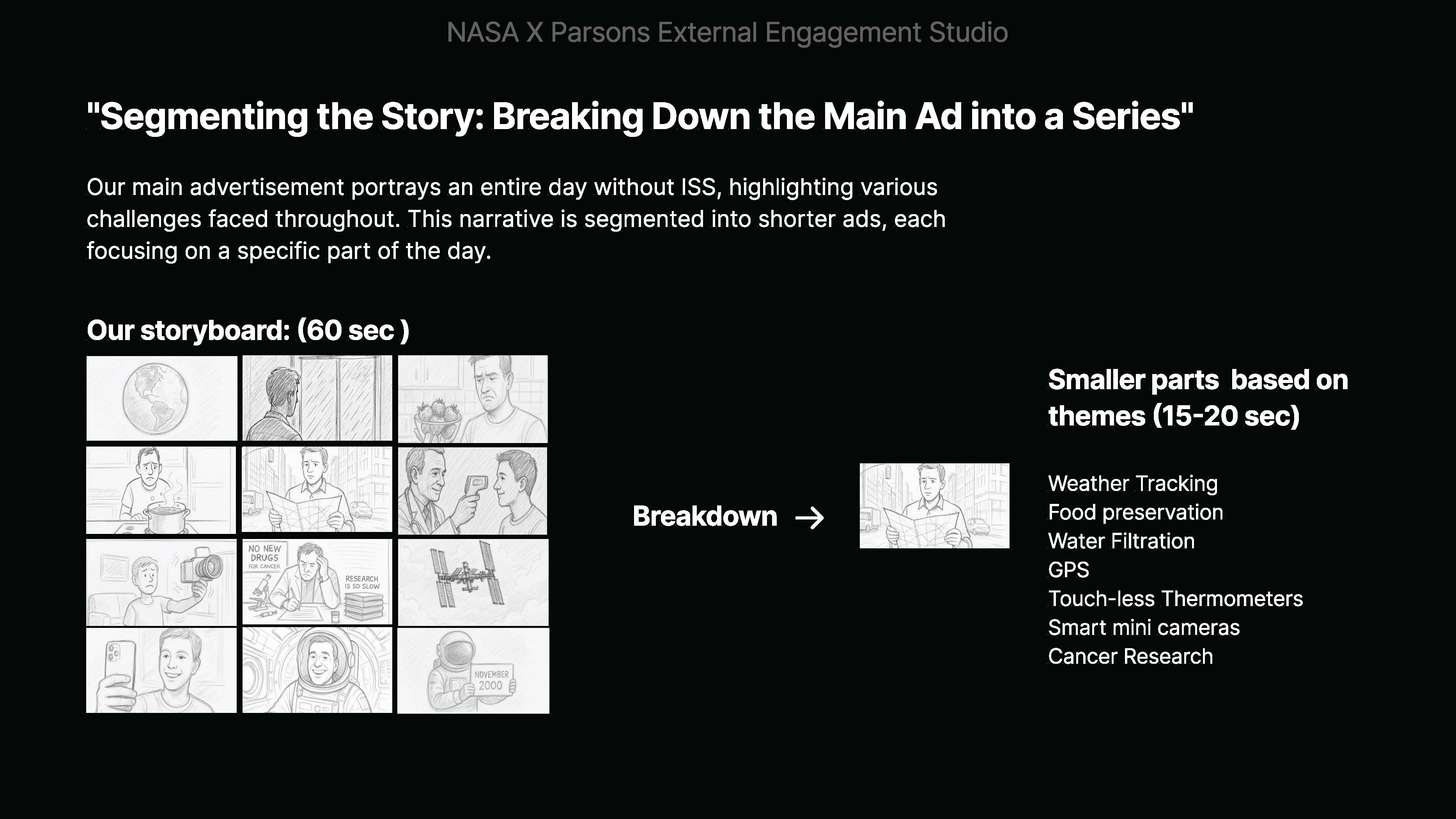
SCRIPT & STORYBOARD DEVELOPMENT
VIDEO EDITING
VOICEOVER NARRATION
CLIENT COMMUNICATION
DECK DESIGN & PRESENTATION
The Challenge
NASA's communications are largely for scientists and researchers, leaving much of it out of reach for the general public. This creates a barrier to public engagement and limits awareness of the life-changing impacts of space exploration. This gap between the space industry and the broader public is only growing more urgent — with the ISS retiring in 2030, NASA faces critical questions of how space exploration will be approached going forward, and what funding and public support for it will look like.
Project Brief: How might we tell the story of the opportunity landscape beyond earth in low Earth orbit (LEO) and the evolution of NASA's extraordinary scientific achievements?
The Strategy
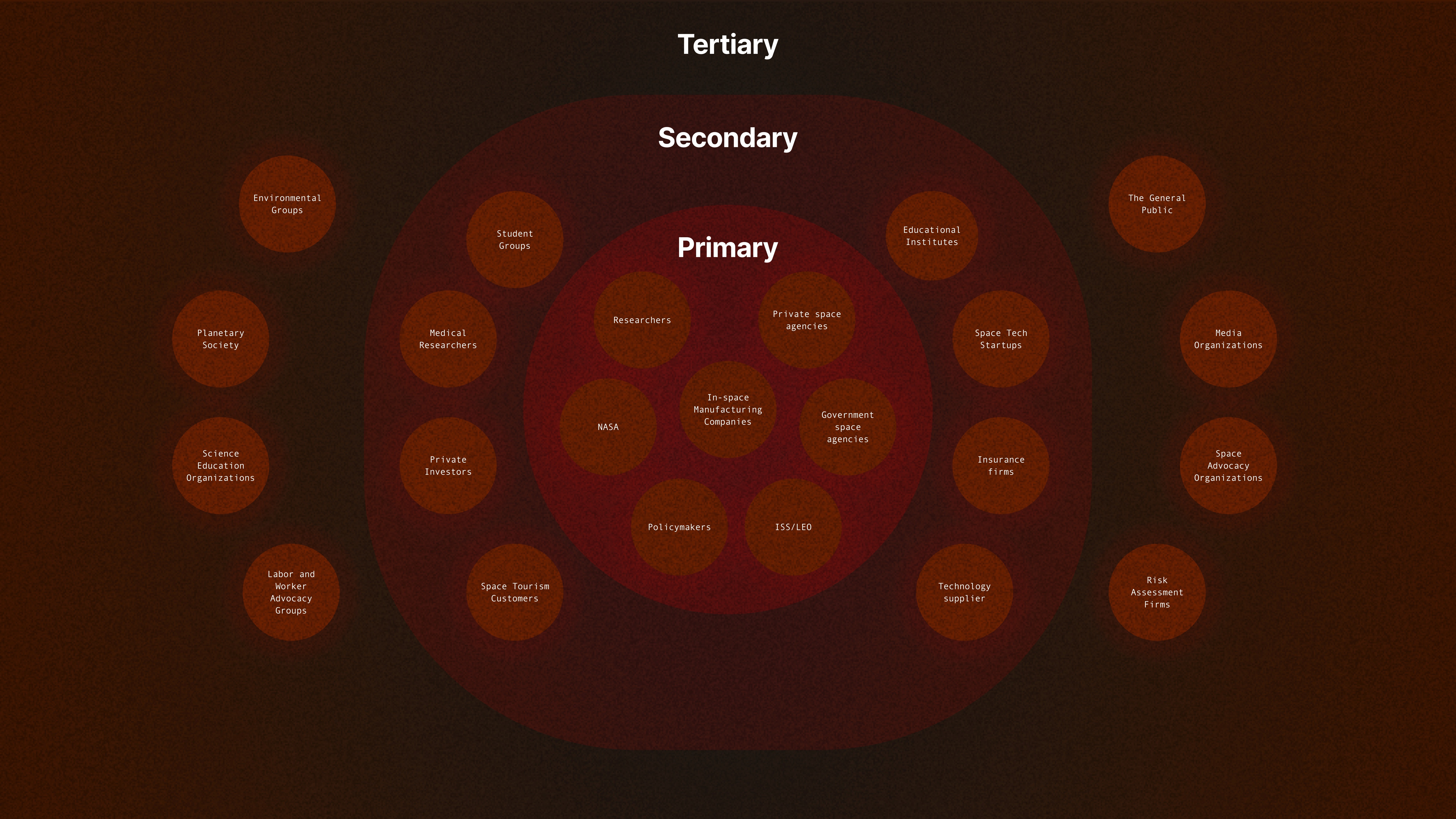
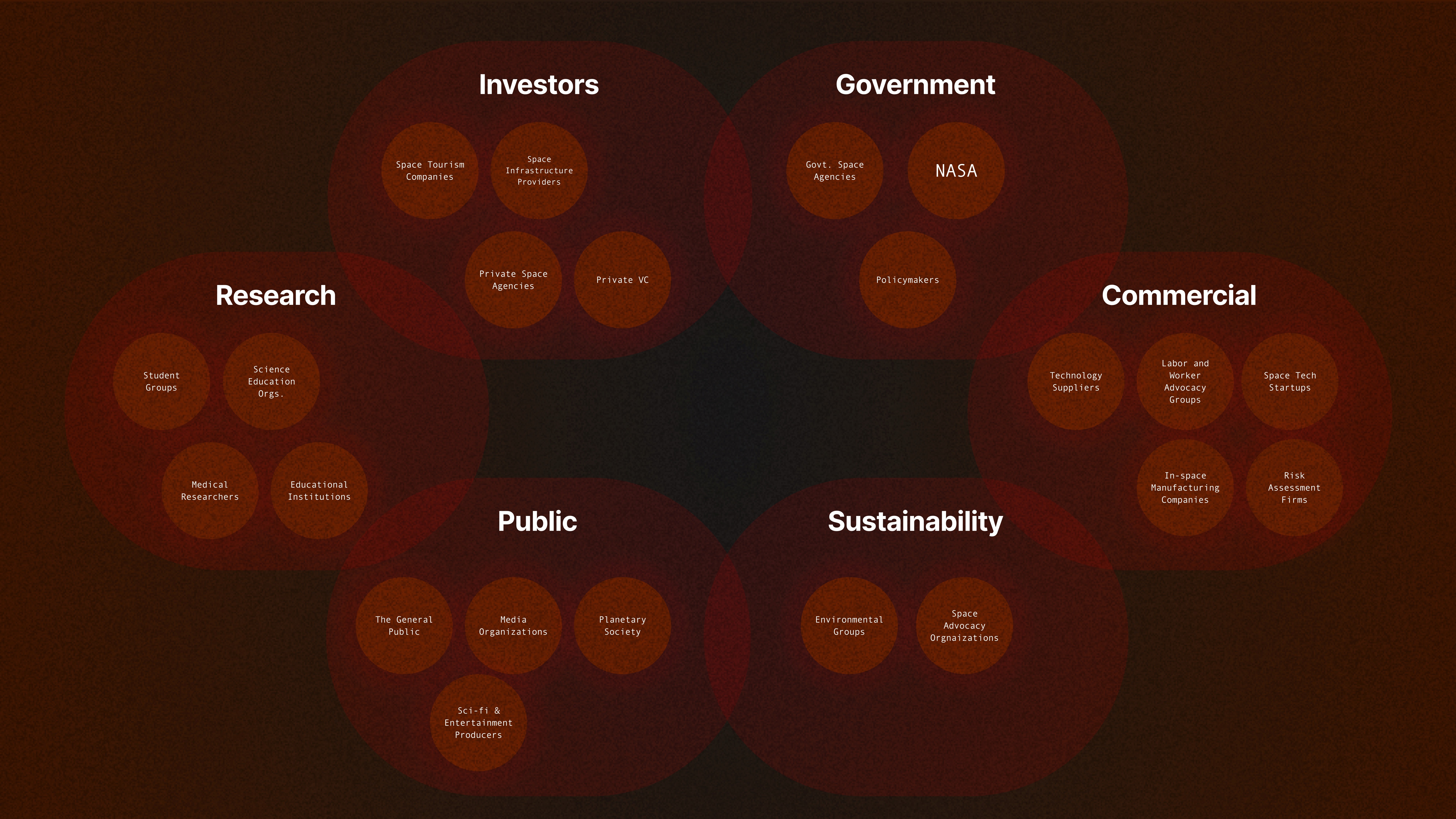
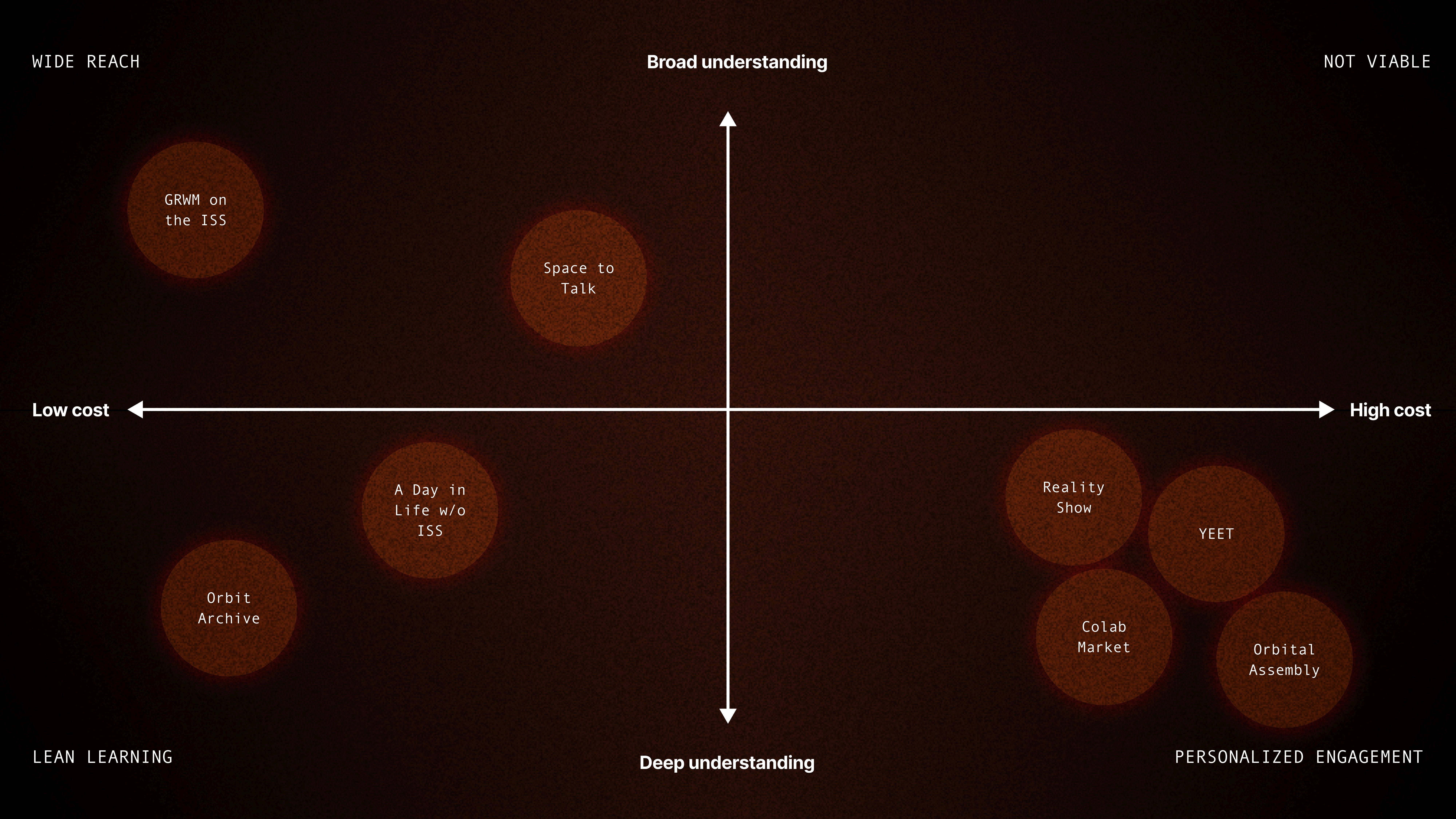
Our strategy is grounded in a research-driven understanding of NASA's ecosystem, including current engagement strategies employed by the space industry and its network of stakeholders. We also learned that stakeholders are spread across six domains, leading us to divide our solution across 8 prototypes in order to effectively communicate and address the priorities of each.
The Solution
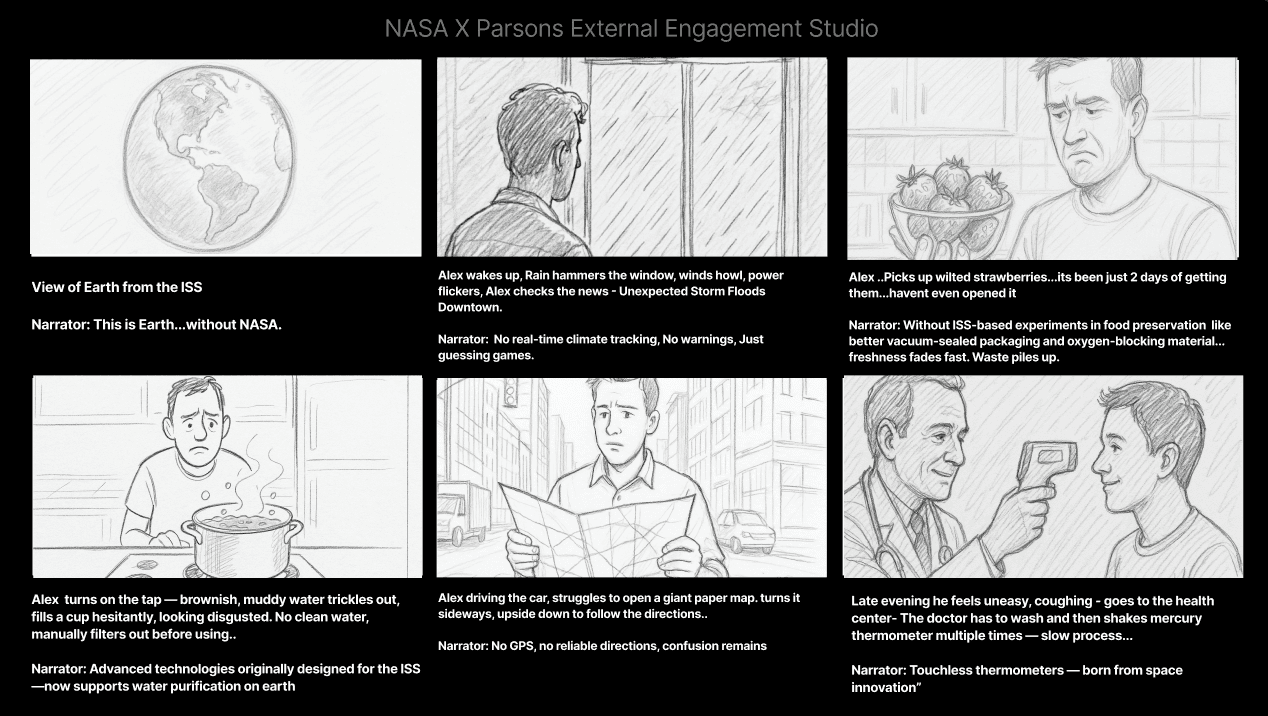
My subgroup's prototype is a campaign concept that reveals the invisible impact of NASA's contributions by imagining life on Earth without them. By reframing the science through the lens of everyday life, we translate decades of research into relatable, emotionally resonant narratives and demonstrate just how integral this research is. Delivered as a short-form video for NASA's social media channels, this approach meets audiences where they already are to close the gap between the space industry and the public.
RESEARCH METHODS
Exploration
Client discovery, stakeholder mapping, channel audit, landscape analysis, audience research, assumption mapping
Validation & Iteration
Presented insights and concepts to client and iterated based on feedback
40+
articles and resources
10+
hours spent meeting with clients at NASA
60+
concepts
8
Prototypes developed
INSIGHTS
The gap isn't in support, it's in comprehension. NASA communicates like a research institution, not a storyteller, leaving the general public without an accessible way in. This shows up in the numbers: though a majority of Americans see U.S. space leadership as essential, their priorities for NASA lean toward protective concerns, like monitoring asteroids and climate, over the research that shapes daily life.
Stakeholder needs are fragmented across six distinct domains: research, investment, government, public, sustainability, and commerce. Each has different priorities, meaning a single message can't serve every audience equally. Our solution created 8 prototypes.
Loss resonates more than achievement. Audiences engage more deeply with what they stand to lose in their own lives than with technical accomplishment alone.
A Day in the Life Without the ISS
AUDIENCE
The Curious Learner: students and early-career professionals who are fascinated by space, science, or just love to learn new things.
The Skeptical Public: those who view space funding either with doubt or indifference. They need clear, relatable information that explains how space exploration directly benefits life on Earth.
DISTRIBUTION CHANNELS
Owned media: Youtube, all Instagram accounts, TikTok, Facebook, X, Linkedln
MOODBOARD HIGHLIGHTS

STORYBOARD
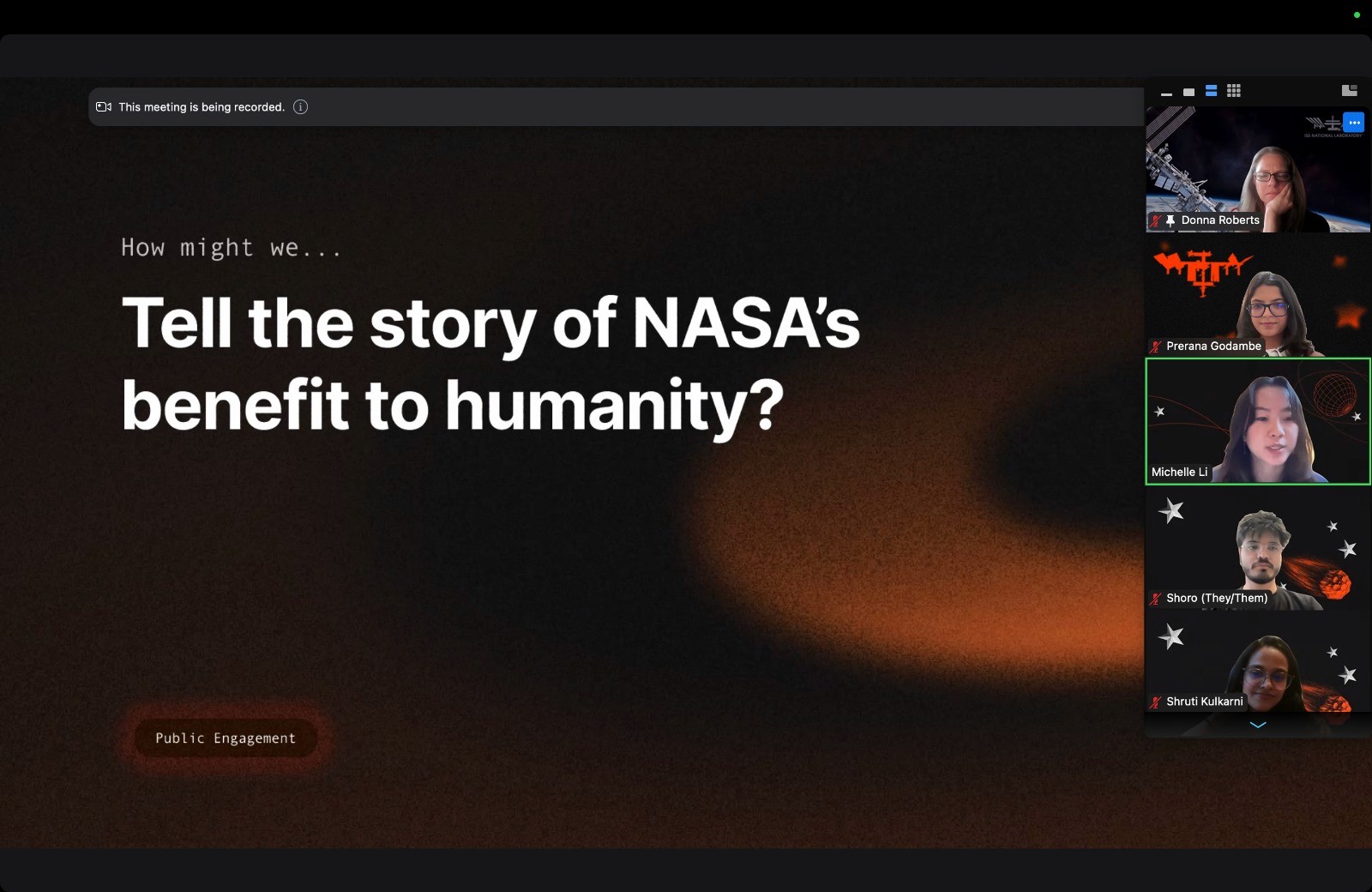
PRESENTING TO NASA!
Additional Prototypes from the Team
GET READY WITH ME ON THE ISS
A GRWM style video filmed by astronauts on the ISS while they talk about topics ranging from the future of research and current research and missions to how they adjust to gravity, ship cargo to space, or prepare for an experiment.

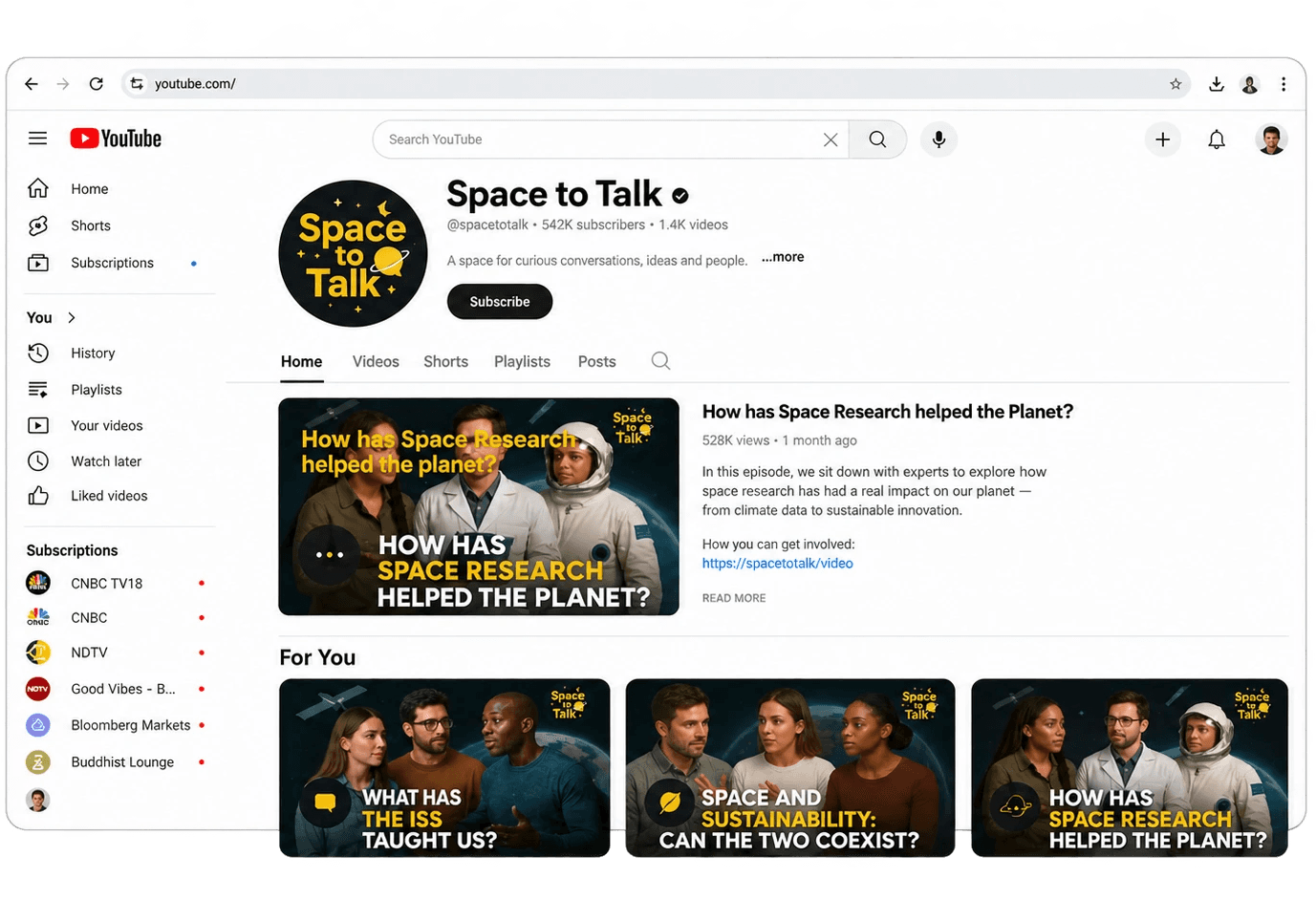
SPACE TO TALK
A dialogue-driven series on Youtube unpacking different perspectives about the future of commercial space with future opportunities for live events, youth and community labs, and global editions.
REALITY SHOWS ON THE ISS
Reality shows filmed aboard the ISS, meant to be both educational and entertaining while optimizing on celebrity and pop culture.


COLAB MARKET
A social impact investment platform for space experiments and commercial ventures, supporting collaborative funding, shared ownership, public participation in space exploration.

Outcomes
We presented prototypes to NASA and received enthusiastic, unanimous buy-in. We continued meeting with our clients after the semester to advise on how our strategy could shape their marketing and communications moving forward, making us the first cohort to continue with a client beyond the structured engagement. Due to significant workforce reductions, restructuring, and proposed budget cuts in 2025, full implementation wasn't feasible.
OTHER PROJECTS
Reimagining Sushy Glow Cosmetics
BRAND IDENTITY
MoodHaus: A Complete Brand System
BRAND IDENTITY
CREATIVE STRATEGY
Genius Loci: A Place Branding Agency
